Lisbon – Day 2 – Évora
Saturday, 06-Jun-2026
Tags: Travel
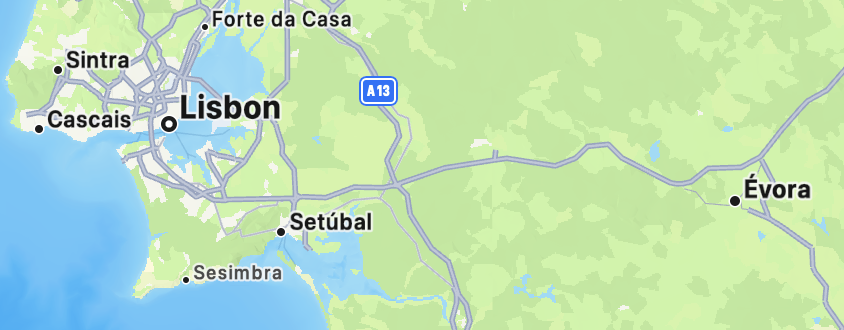
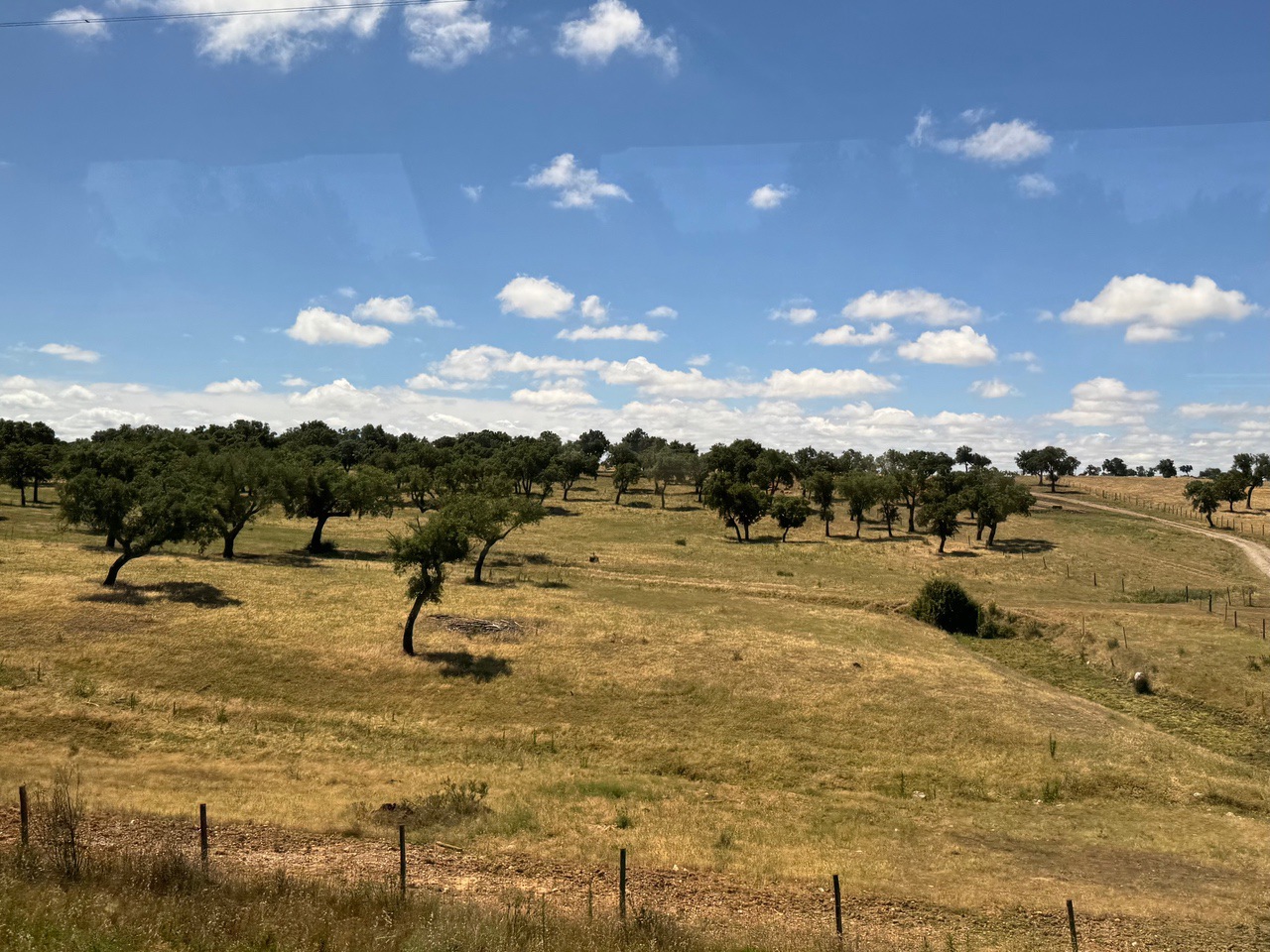
On Saturday, we went to Évora, the walled city in the Alentejo area of Portugal, dry, famous for cork, wine, and black pig products.
From Visit Alentejo:
Alentejo is set in the South of Portugal, between the Tagus River and the Algarve. The East borders Spain and the West is bathed by the Atlantic Ocean. It is an extensive region, essentially rural and sparsely populated, which makes up about one third of Portugal.
The cork oak, or sobreiro, is the soul of the Alentejo, a living landscape that can only be found around the Mediterranean basin. The cork trees extend for miles, and each tree plays an essential role in this ecosystem. Their bark is harvested every nine years, and a single tree can live for centuries. The trees are protected by law.
From Wikipedia:
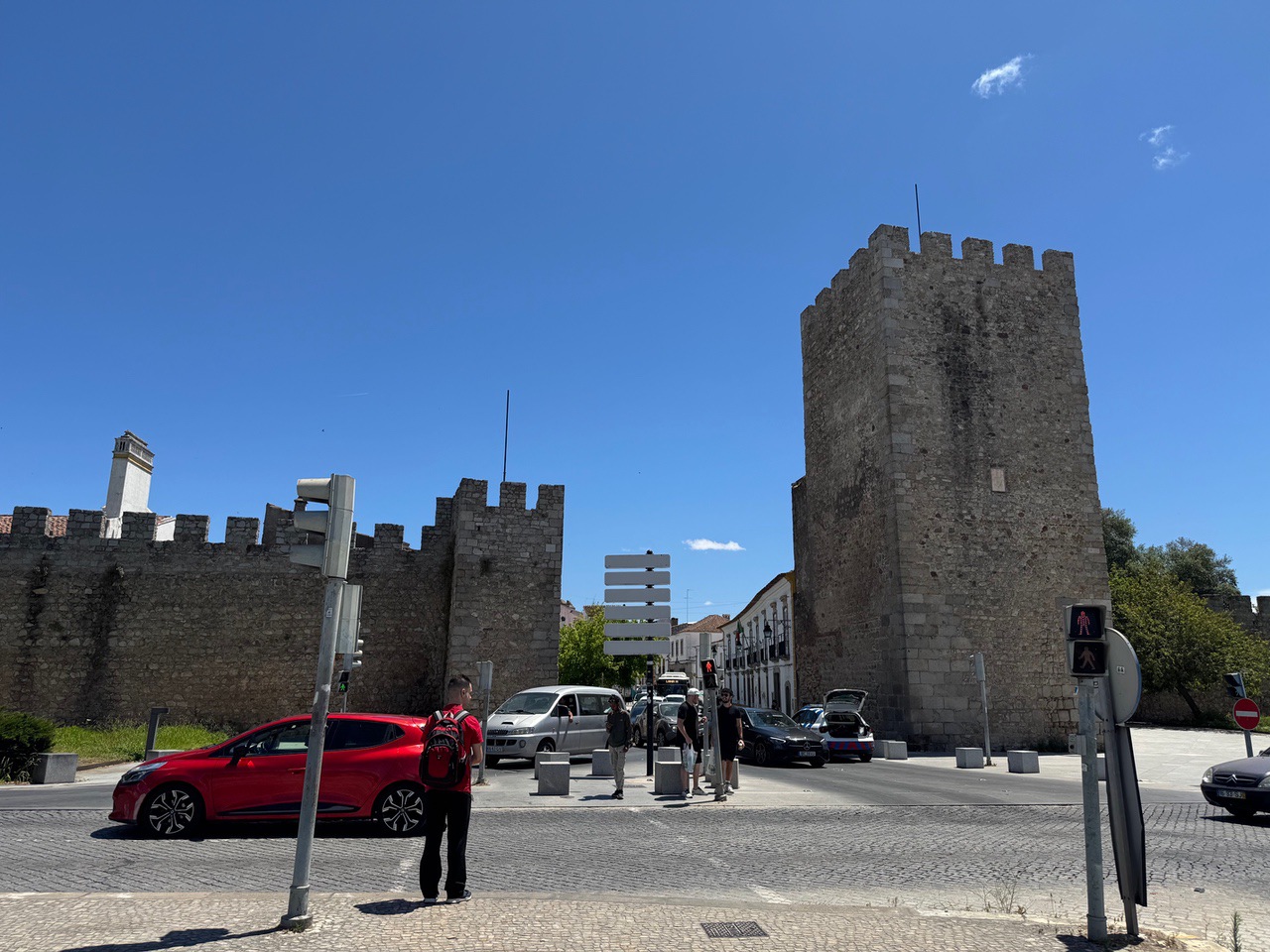
Évora is considered the historic capital of the Alentejo region. Due to its well-preserved old town centre, still partially enclosed by medieval walls, and many monuments dating from various historical periods, including a Roman Temple, Évora is a UNESCO World Heritage Site since 1986.
Évora, like many other towns in Portugal, has a history that includes Celts, Romans, Visigoths, Arab Muslims, Portugese in 1165, wars with the French, etc.
Prior to the trip, we purchased Rede Express bus tickets. By the time Eileen checked 2 weeks before the trip to Portugal, the bus we were hoping to take was full so we booked a 10:30 am with return at 8:45 pm. The trick was finding a restaurant that served before 7:30 pm, and we we found what looked like a nice - Cafe Alentejo.
After a hearty breakfast at the hotel, we took the Blue line to the Sete Rios bus station. With one stop in between, we got to Évora around 12:15, walked the 5 minutes to the outer wall and another 5 minutes to the core section of the sights.
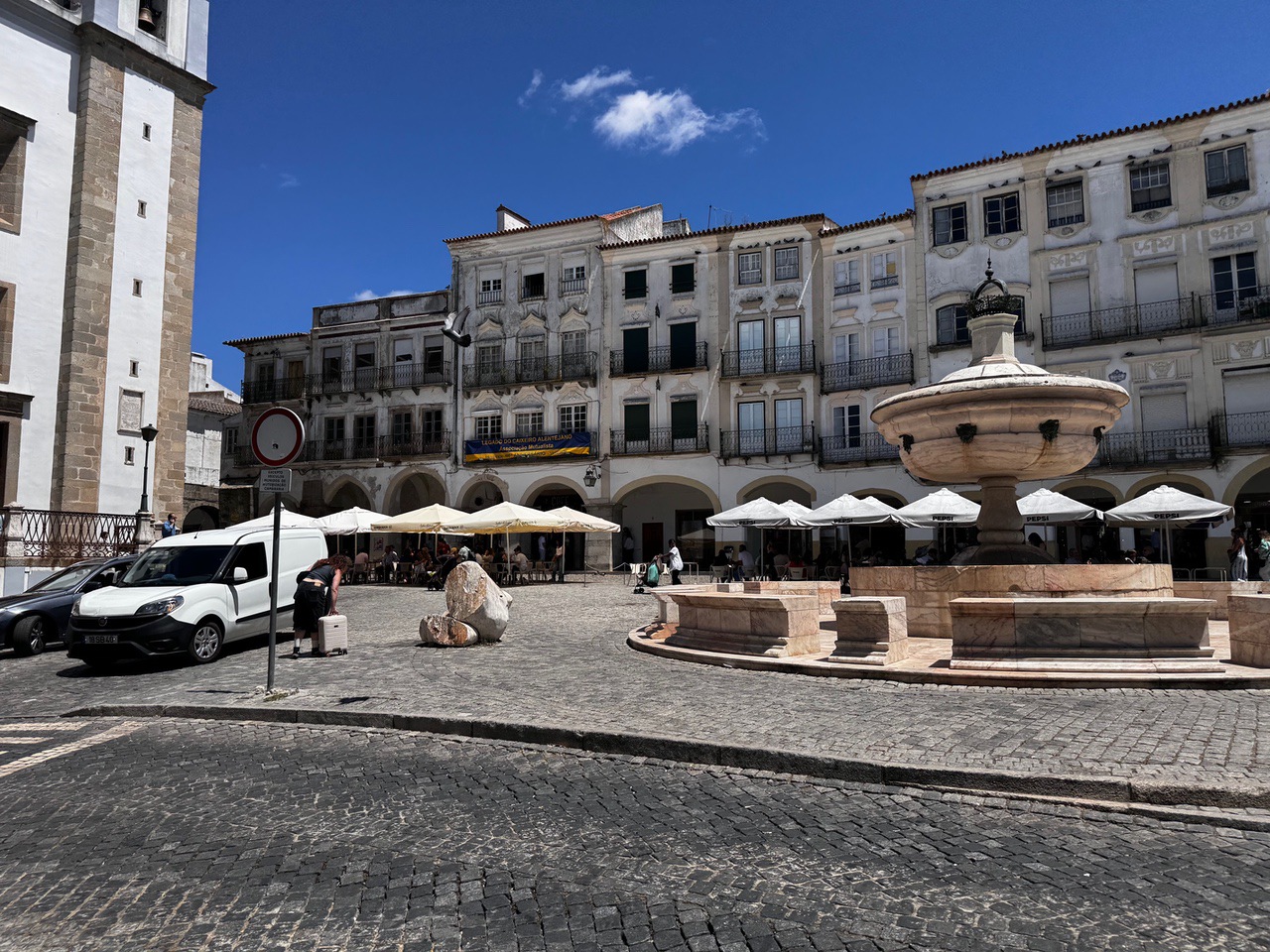
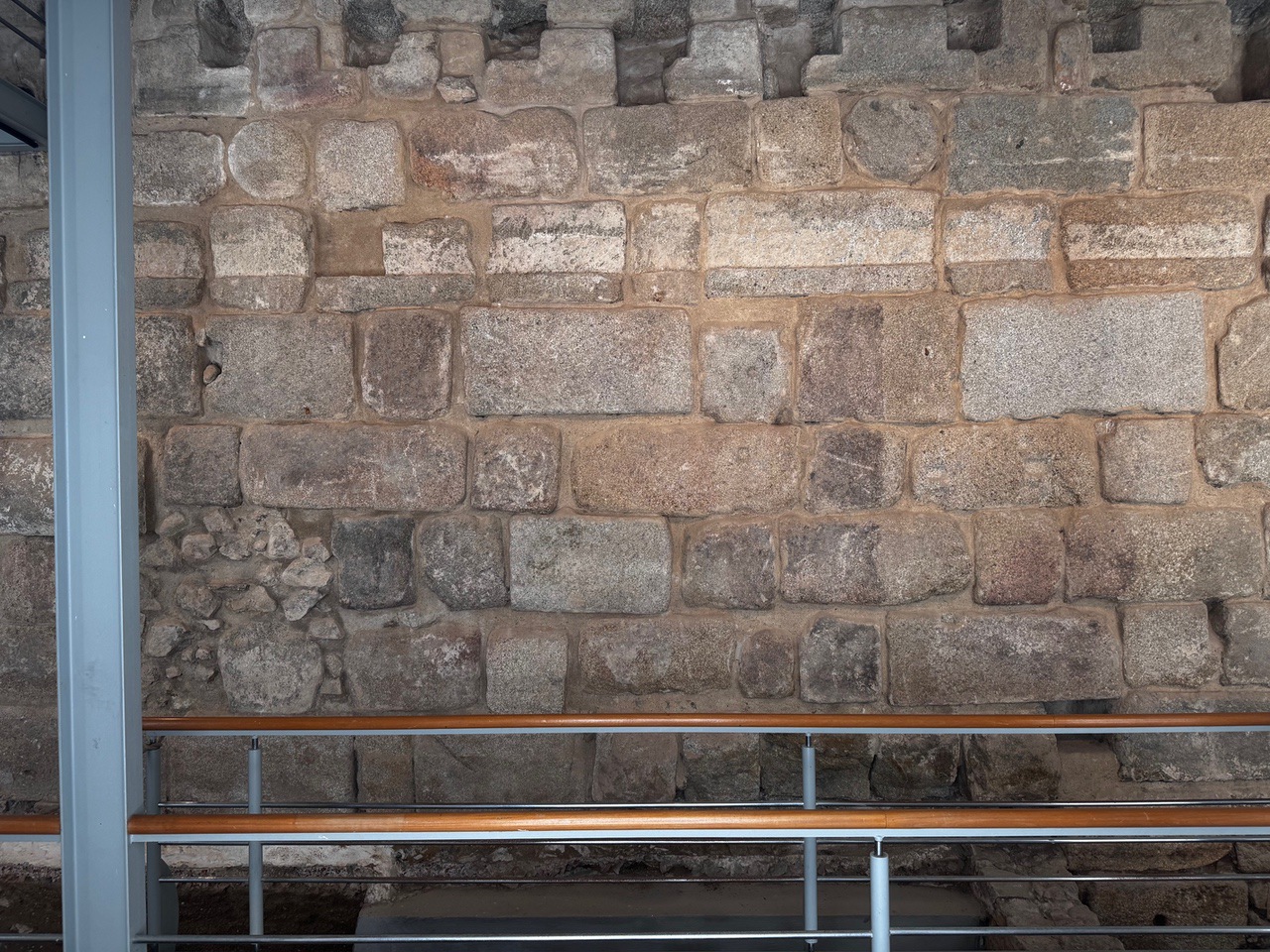
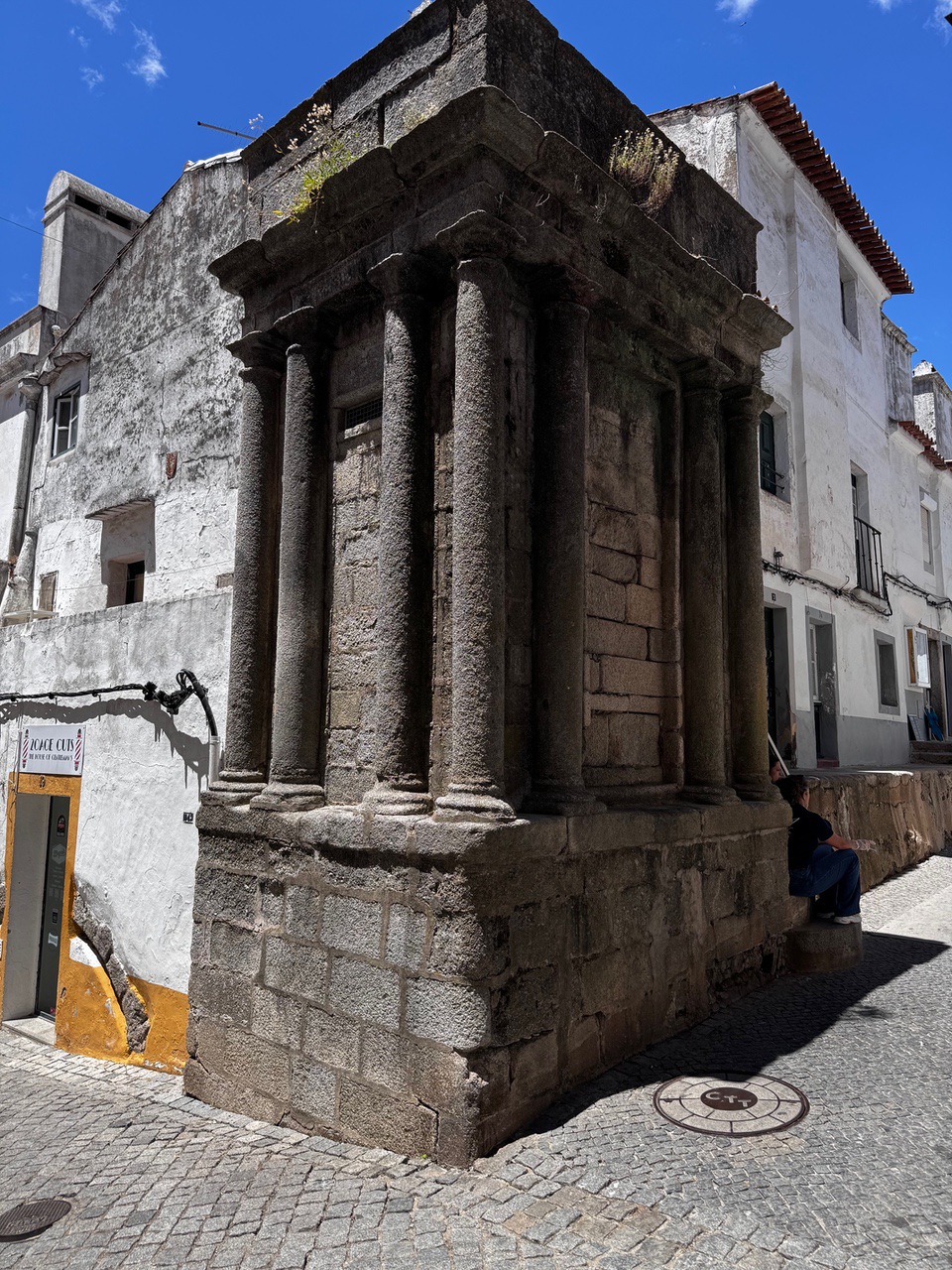
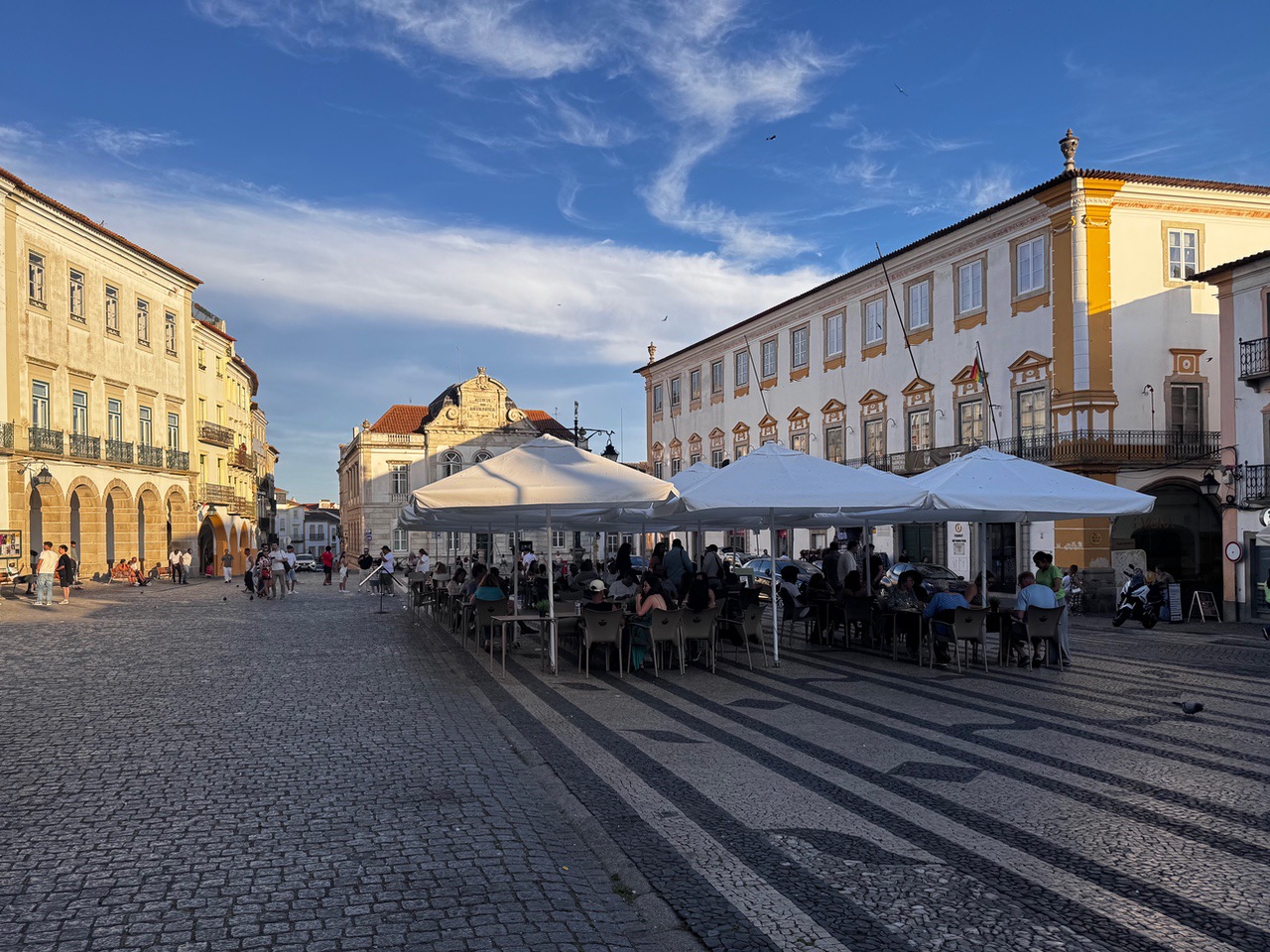
Roughly following the Rick Steve’s self-guided walk, we started at Praça do Giraldo, named after Giraldo the Fearless, the Christian knight who retook Évora from the Moors in 1165. From there we looked at Roman remnants protected behind glass, and then a remnant of the 16th century aqueduct.
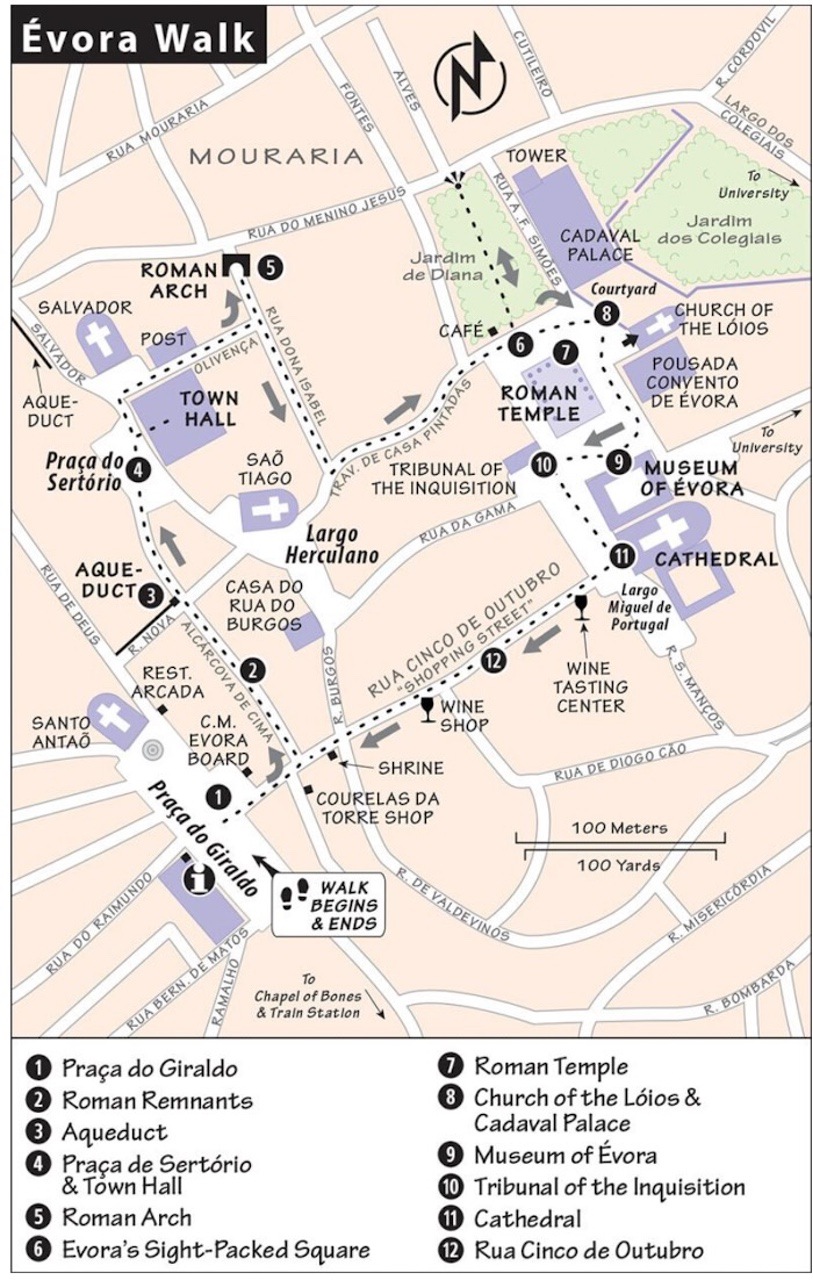
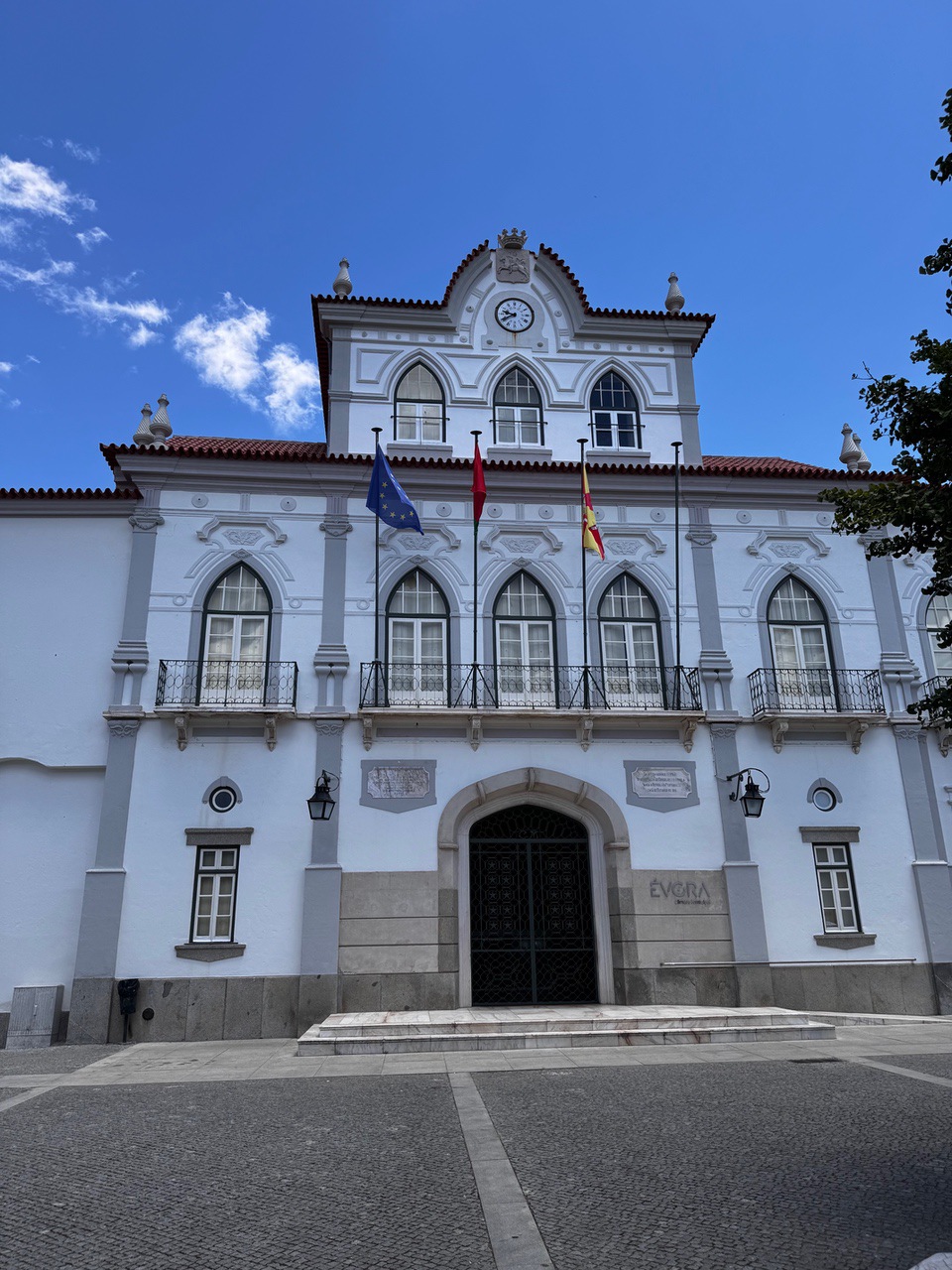
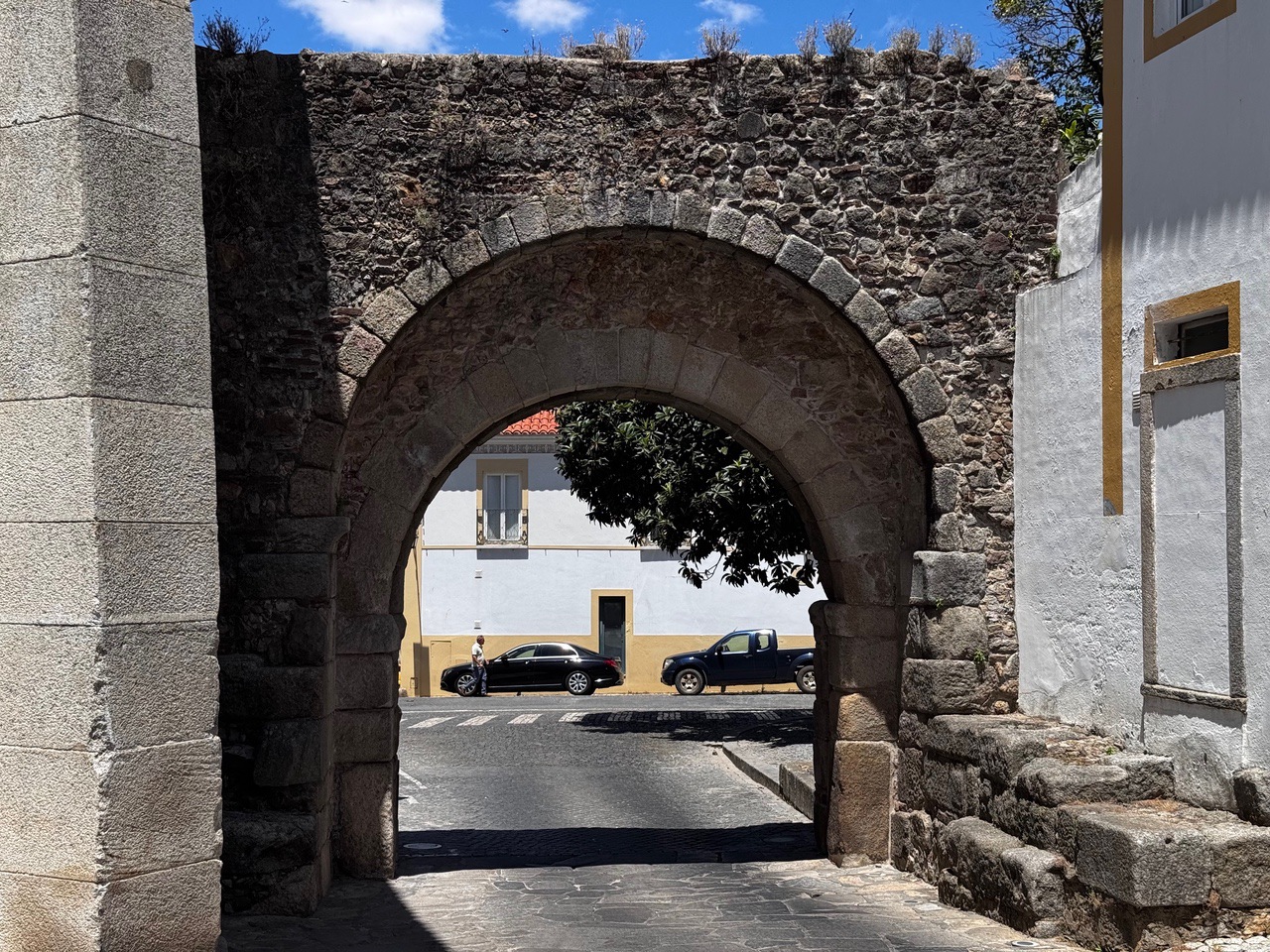
From there, we walked to Praça do Sertório to look at the outside of the Town Hall — being Saturday, it was not open. The next stop was the Porta de Dona Isabel which was once a main gate in the Roman wall.
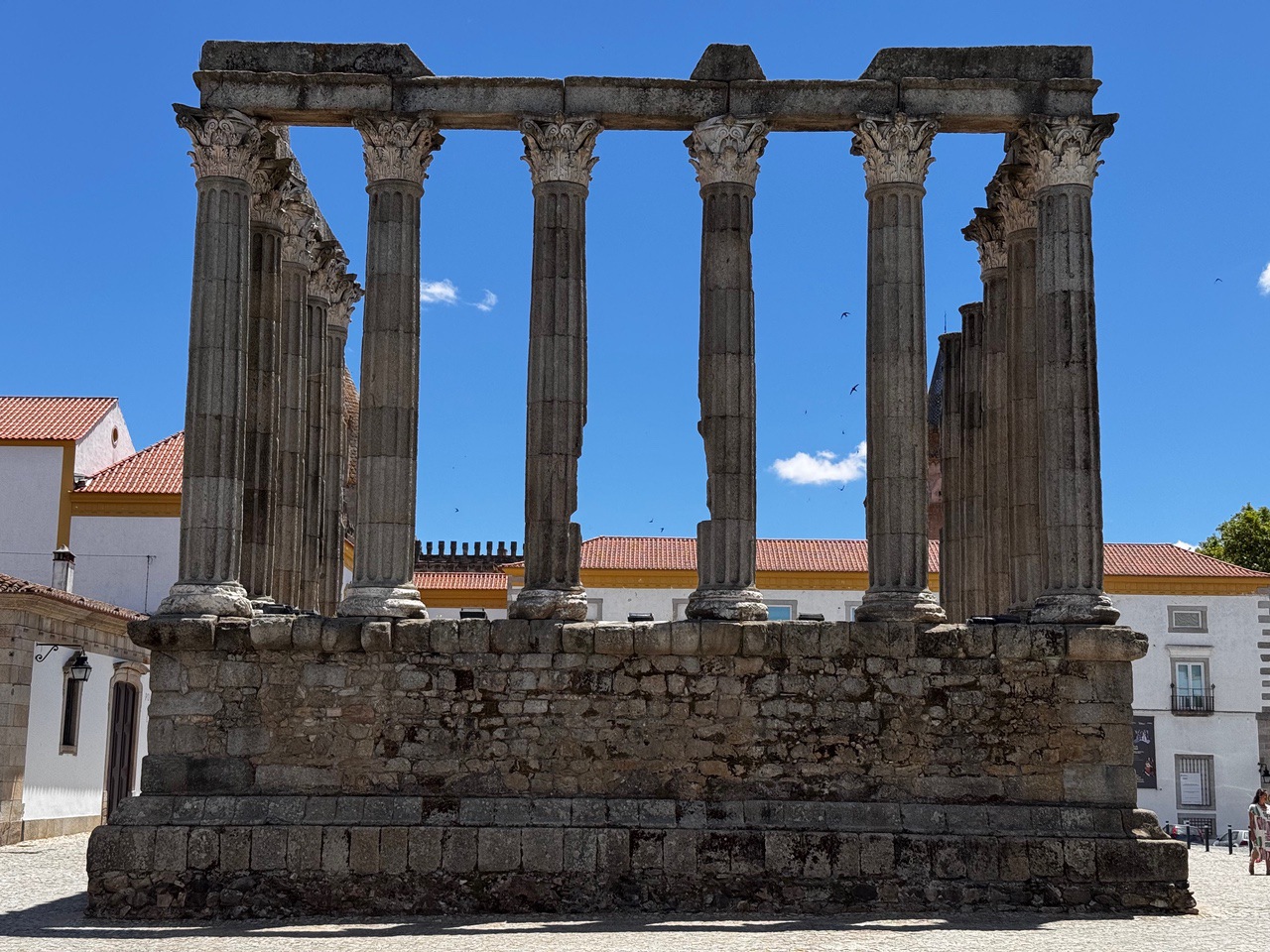
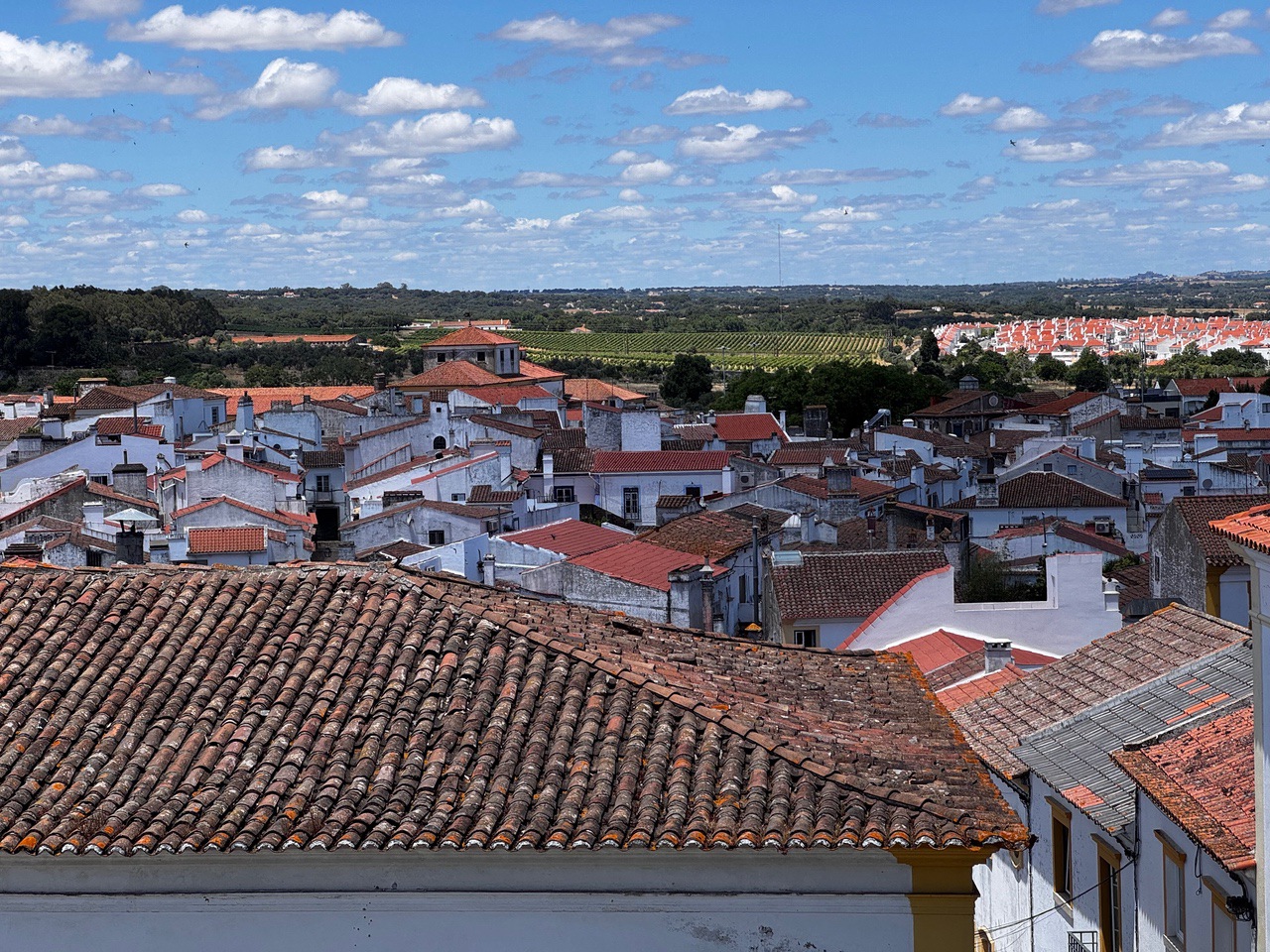
From there, we walked to the square at the town’s high point to see the Roman temple, the palace and chapel of the Cadaval clan, and a monastery now a luxurious hotel. The square includes the Jardim de Diana, a park mistakenly named for the Roman goddess Diana when the temple was thought to be dedicated to her. View was quite nice.
Tired, we headed back to Praça do Giraldo, walking past the contemporary art museum, which stands on the site of Evora’s notorious past as a tribunal site during the inquisition, where thousands of people, many of them Jews, were tried and found guilty of crimes against faith. We had a light lunch of salad greens, walnuts, mango, and avocado in a fig dressing on a shaded table at Évora Brunch Cafe.
After lunch, we headed back up to tour the cathedral. The ticket gave us access to the tower view, the cloisters, the cathedral and choir room, and a museum of sacred art, the museum housed in one was a dorm/ religious college, complete with refitting of cells (bedrooms) with art in each.
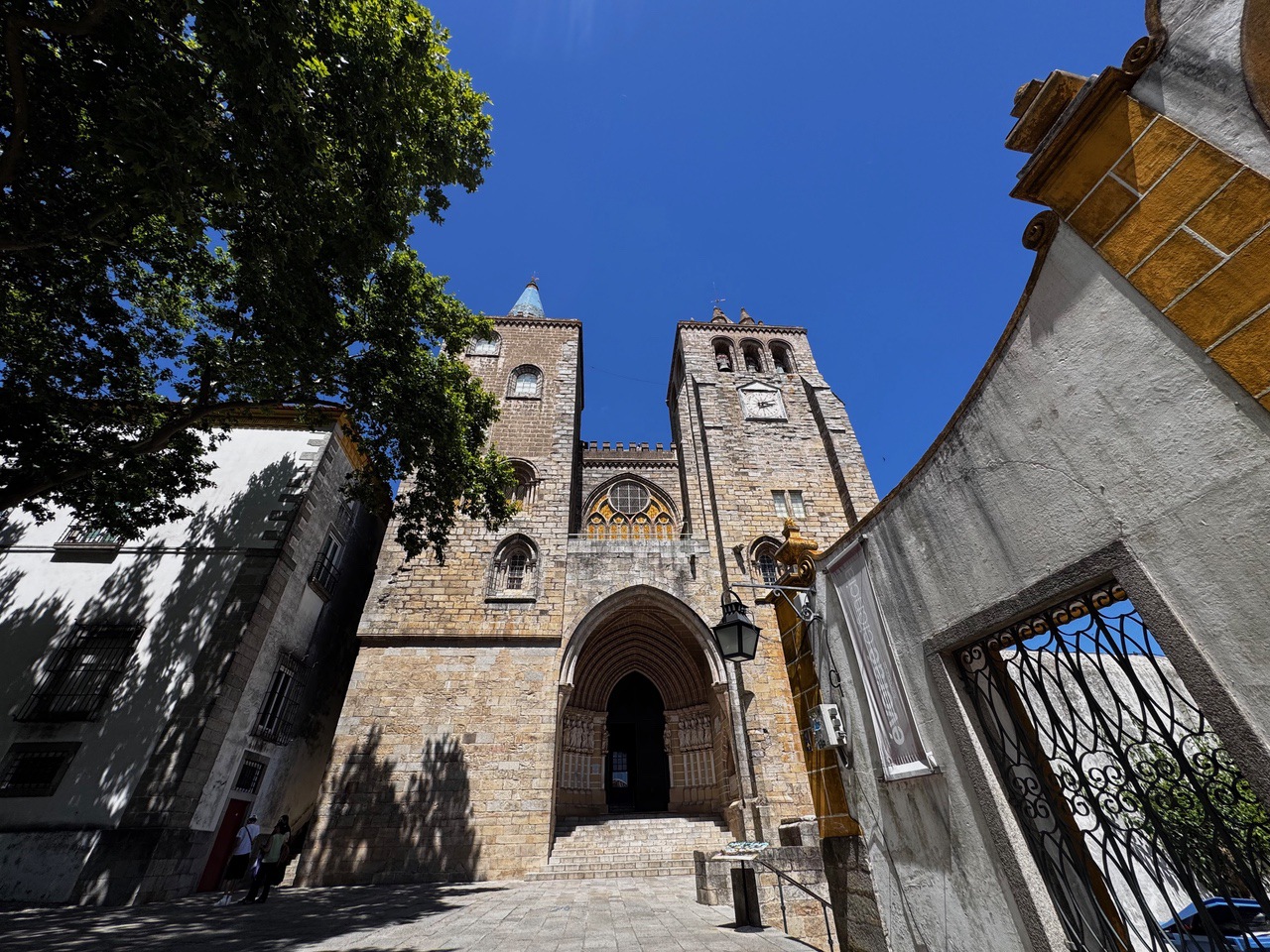
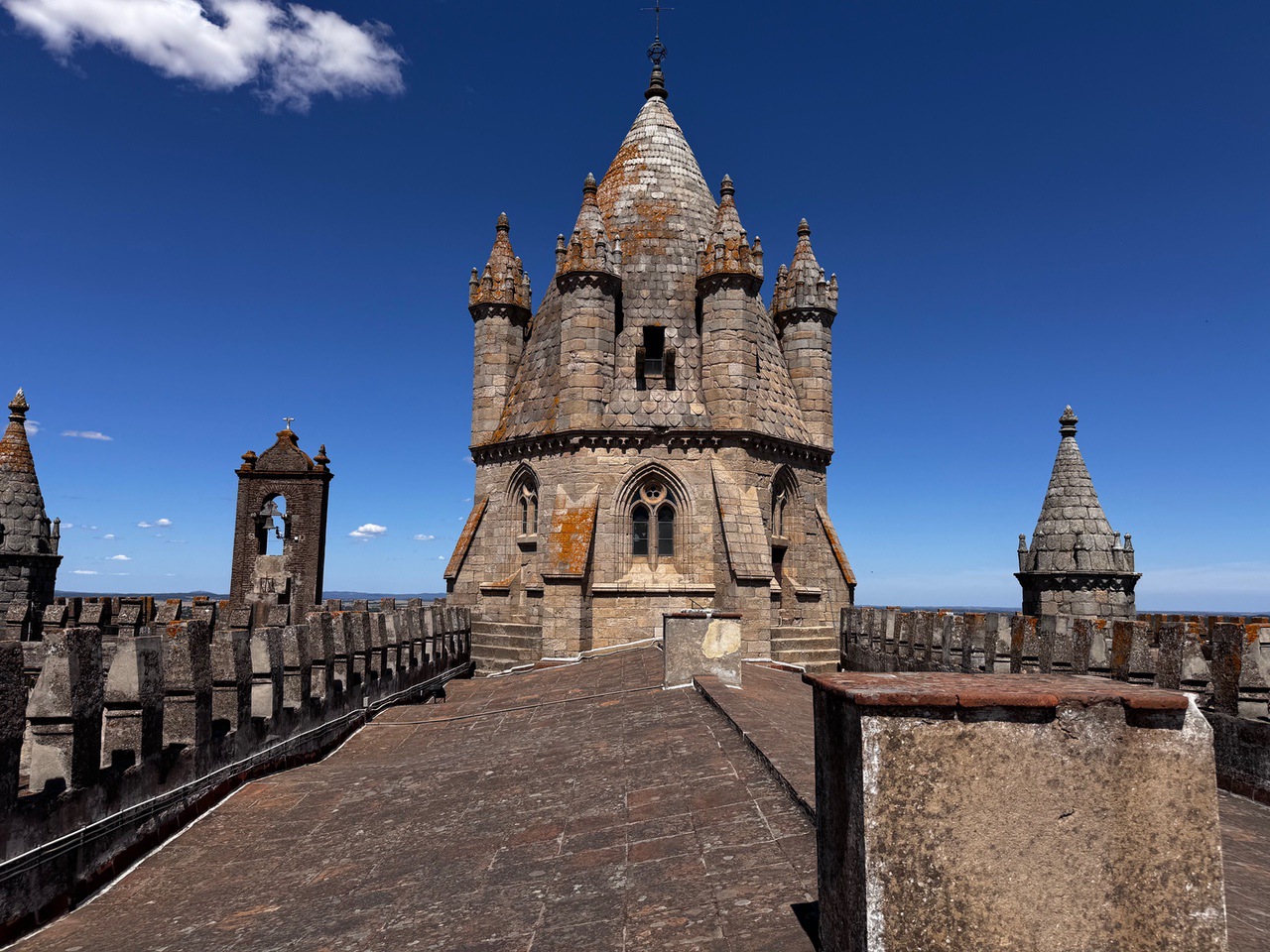
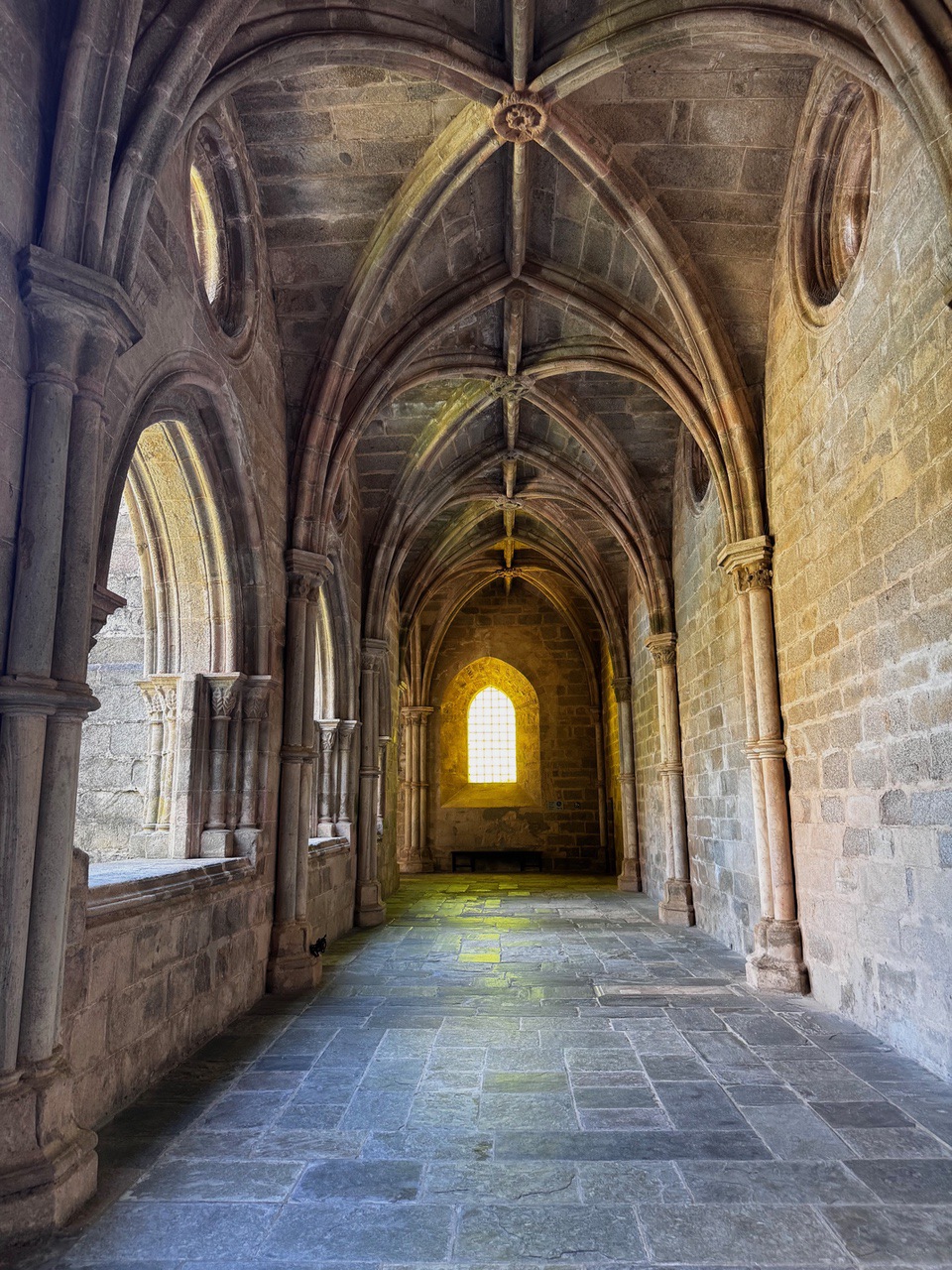
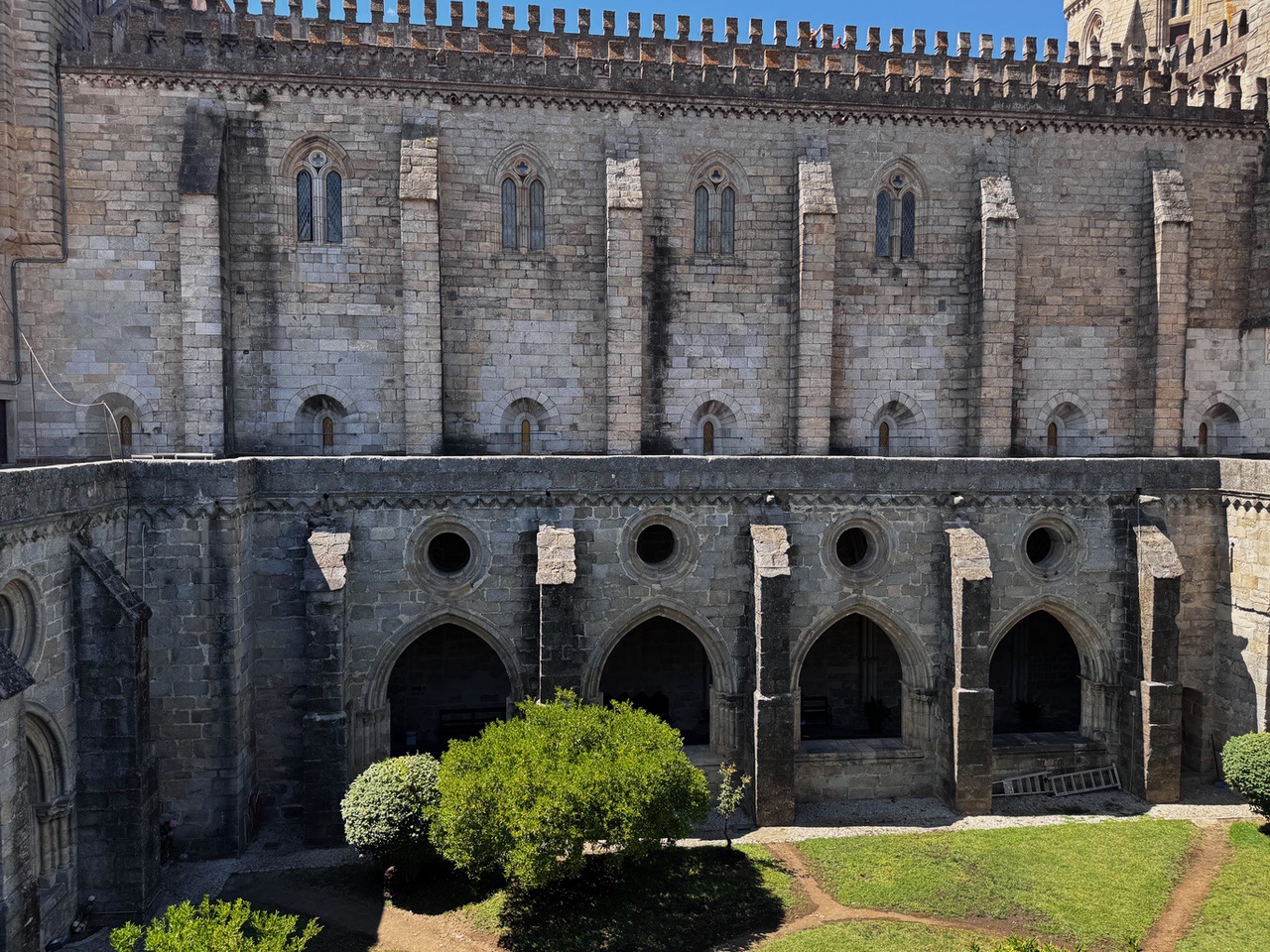
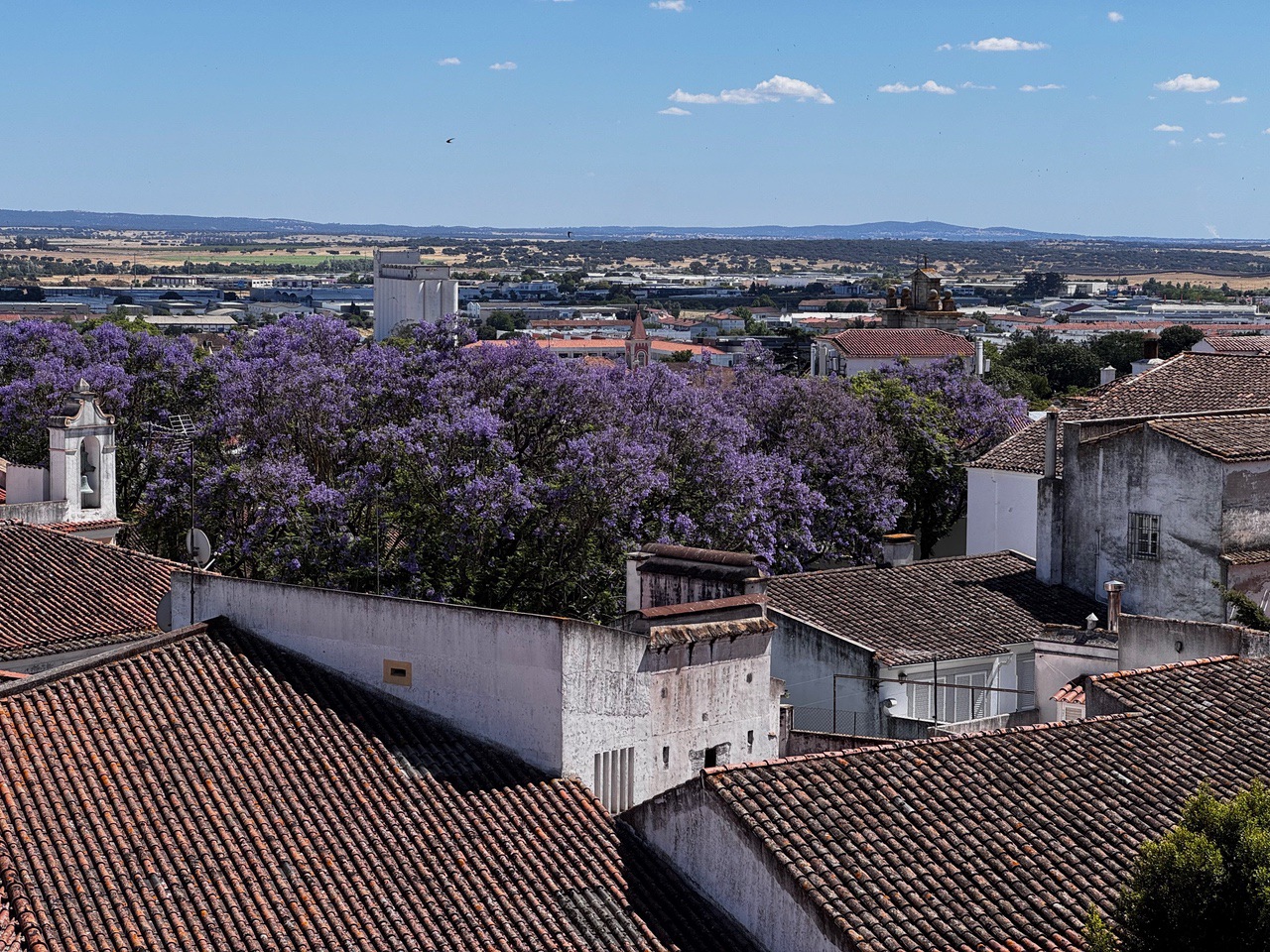
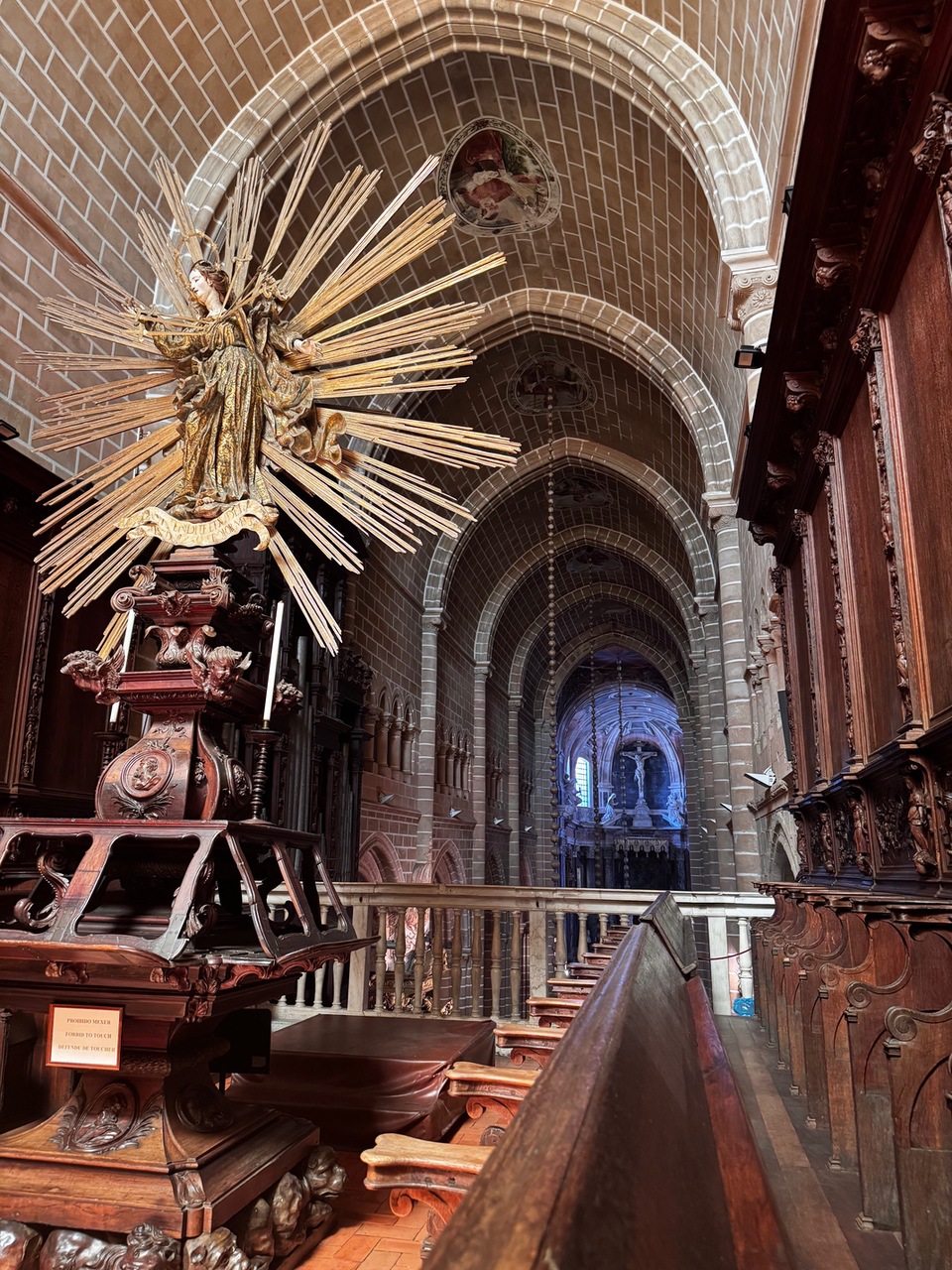
After the cathedral, we walked south to the public garden. The garden and the town itself were very busy all day with graduating students of the university of Évora graduation celebrating with family and friends. We walked back north through the now done for the day Municipal Market to a Praça 1º de Maio for a glass of wine and relaxed until it was time to go to dinner at Cafe Alentejo.
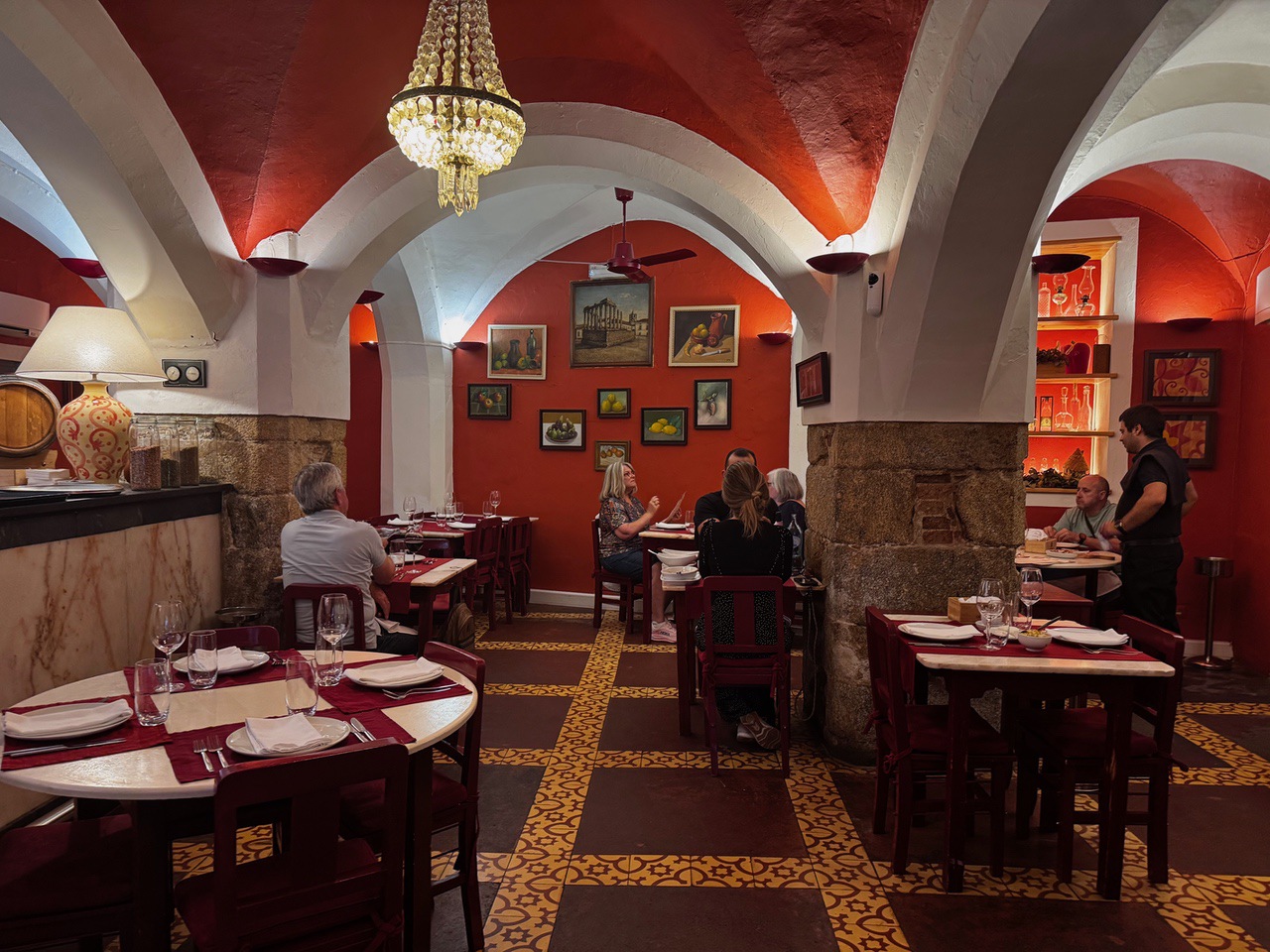
The restaurant, on a side street off Praça do Giraldo, was a great choice, beautiful inside and a great wait staff. We both had an alentejo speciality - thin sliced pork, one a loin, the other iberico.
We headed to the bus station for the ride back to Lisbon, and then metro back to the hotel.
Other posts that refer to this post:
--
Larry and Eileen Samberg